
What Is Expense Tracking? A Complete Beginner's Guide to Managing Your Money
What Is Expense Tracking? A Complete Beginner's Guide to Managing Your Money
Have you ever wondered where your salary disappears before the end of the month?
Many people earn a good income but still struggle to save because they don't know exactly where their money goes. Small daily expenses such as coffee, online subscriptions, food delivery, transportation, and impulse purchases gradually add up.
This is where expense tracking becomes one of the most valuable financial habits you can build.
Expense tracking helps you understand your spending patterns, control unnecessary expenses, create realistic budgets, and achieve financial goals more confidently.
What Is Expense Tracking?
Expense tracking is the process of recording every amount of money you spend, whether it's a small purchase or a large payment.
Each expense usually includes:
-
Date
-
Amount
-
Category
-
Payment method
-
Notes (optional)
By consistently recording expenses, you create a clear picture of your financial behavior.
Why Is Expense Tracking Important?
Tracking your expenses provides several benefits.
1. Understand Your Spending Habits
Most people underestimate how much they spend on small daily purchases.
Tracking reveals exactly where your money goes every month.
2. Build Better Budgets
Once you know your spending habits, creating an accurate monthly budget becomes much easier.
Instead of guessing, your budget is based on real financial data.
3. Save More Money
Expense tracking helps identify unnecessary spending.
Even reducing a few recurring expenses can significantly increase your monthly savings.
4. Avoid Financial Stress
Knowing your financial position gives you greater confidence when paying bills, planning vacations, or preparing for emergencies.
5. Reach Financial Goals Faster
Whether you're saving for:
-
A new car
-
A vacation
-
A home
-
Education
-
Retirement
tracking expenses helps you stay on course.
What Expenses Should You Track?
Try recording every type of spending, including:
-
Food & Dining
-
Groceries
-
Transportation
-
Fuel
-
Shopping
-
Entertainment
-
Bills & Utilities
-
Rent
-
EMI Payments
-
Healthcare
-
Education
-
Travel
-
Insurance
-
Investments
-
Subscriptions
-
Miscellaneous
The more complete your records, the more useful your financial insights become.
How to Start Expense Tracking
Getting started is simple.
Step 1
Record every expense immediately after spending.
Step 2
Assign each expense to a category.
Step 3
Review your spending every week.
Step 4
Identify categories where spending can be reduced.
Step 5
Adjust your budget based on actual spending patterns.
Common Expense Tracking Mistakes
Avoid these common mistakes:
-
Forgetting to record cash expenses.
-
Ignoring small purchases.
-
Using too many categories.
-
Never reviewing spending reports.
-
Tracking expenses inconsistently.
Consistency is more important than perfection.
Manual Tracking vs Expense Tracking Apps
| Manual Tracking | Expense Tracking App |
|---|---|
| Time consuming | Fast and convenient |
| Easy to forget entries | Quick recording |
| Limited analysis | Automatic reports |
| Difficult to manage | Organized categories |
| No visual insights | Charts and spending trends |
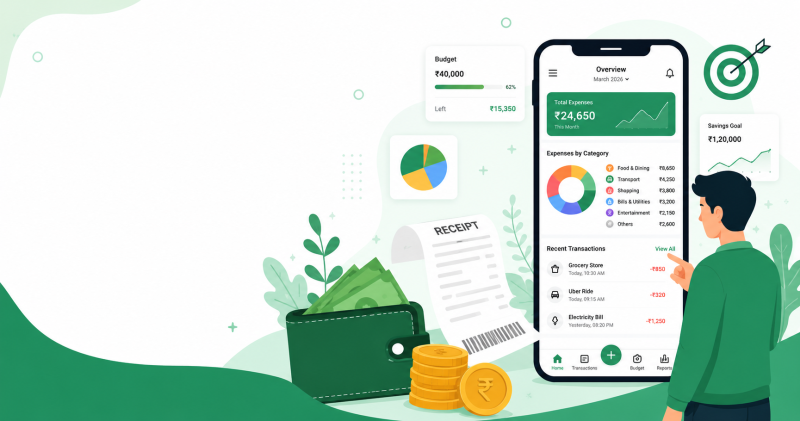
For most people, a dedicated expense tracking app makes the process easier and encourages consistency.
Tips to Make Expense Tracking a Daily Habit
-
Record expenses immediately after each purchase.
-
Review your spending every Sunday.
-
Create realistic monthly budgets.
-
Monitor recurring subscriptions.
-
Set savings goals.
-
Keep categories simple.
-
Track both income and expenses.
Frequently Asked Questions
How often should I track expenses?
Ideally, record every expense as soon as it happens. Daily tracking helps maintain accurate records.
Do I need to track small purchases?
Yes. Small daily expenses often have the biggest long-term impact on your budget.
Can expense tracking help me save money?
Absolutely. Understanding where your money goes makes it easier to reduce unnecessary spending and increase savings.
Is expense tracking only for people with low income?
No. People at every income level benefit from tracking expenses because it improves financial awareness and decision-making.
Final Thoughts
Expense tracking is one of the simplest habits you can develop to improve your financial health. It provides visibility into your spending, helps you build realistic budgets, reduces unnecessary expenses, and supports long-term financial goals.
Whether you're managing personal expenses, family finances, or planning future savings, consistent expense tracking creates the foundation for smarter financial decisions.
If you're looking for an easy way to record daily expenses, organize spending into categories, monitor budgets, and understand your financial habits, an expense tracking app like Depto Flow can make the process faster, simpler, and more organized.