
15 Common Budgeting Mistakes and How to Fix Them Permanently
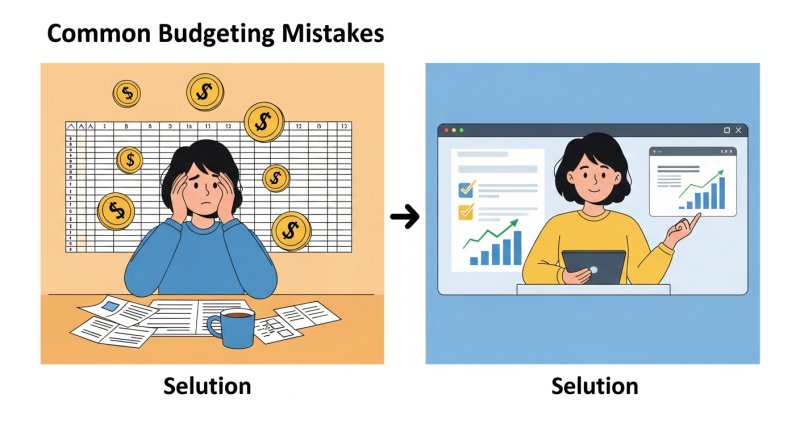
Budgeting often feels like a chore, and for many, it's a frustrating cycle of setting goals and then falling short. If you've ever felt like your budget just isn't working, you're not alone. The truth is, many common budgeting mistakes can derail even the best intentions, preventing you from gaining control over your finances and achieving your money goals. But what if you could identify these pitfalls and learn simple, effective ways to fix them?
This guide will walk you through 15 common budgeting mistakes people make and, more importantly, provide actionable strategies to overcome them. By understanding these missteps, you'll be better equipped to create a budget that truly works for you, helping you save more, spend smarter, and build a stronger financial future.
1. Not Having a Budget at All
Mistake: The most fundamental error is not having a budget in the first place. Without a clear plan for your money, it's easy to overspend, under-save, and wonder where your paycheck went each month.
Fix: Start by understanding your income and expenses. Choose a budgeting method that suits you, whether it's the 50/30/20 rule, zero-based budgeting, or a simple spreadsheet. The goal is to allocate every dollar a job. For beginners, understanding money management without financial knowledge is a great starting point.
2. Unrealistic Budgeting
Mistake: Setting overly ambitious goals, like cutting all discretionary spending overnight, often leads to burnout and abandonment. A budget that's too restrictive is unsustainable.
Fix: Be honest with yourself about your spending habits. Start with small, manageable adjustments. If you spend $500 on dining out, don't suddenly budget $50. Aim for $400, then adjust further next month. Gradual changes are more effective than drastic ones.
3. Forgetting Irregular Expenses
Mistake: Many budgets only account for monthly bills, overlooking annual subscriptions, car maintenance, holiday gifts, or semi-annual insurance premiums. These "surprise" costs can quickly derail your budget.
Fix: Create a separate category for irregular or annual expenses. Divide the total annual cost by 12 and set aside that amount monthly into a dedicated savings fund. This way, when the expense arrives, the money is already there.
4. Not Tracking Every Expense
Mistake: It's easy to track major bills, but small, everyday purchases can add up quickly. Ignoring these "microsplurges" creates blind spots in your spending.
Fix: Track every single dollar you spend. This doesn't mean manually writing everything down. Use a budgeting app like Depto Flow, which allows you to easily record all your income and expenses as they happen. This provides a clear, real-time picture of where your money is going.
5. Confusing Needs with Wants
Mistake: Blurring the lines between essential expenses (needs) and discretionary spending (wants) makes it difficult to prioritize and cut back when necessary.
Fix: Clearly define your needs (housing, food, utilities, transportation, essential healthcare) and your wants (dining out, entertainment, new gadgets, expensive vacations). When money is tight, prioritize needs first.
6. Ignoring Small Spends (Latte Factor)
Mistake: Thinking that a daily coffee or small online purchase doesn't impact your finances. Individually, they seem insignificant, but cumulatively, they can drain your budget.
Fix: Conduct a "spending audit" for a week or two. You might be surprised how much those small, habitual purchases add up. Find small areas to cut back, even if it's just making coffee at home a few days a week.
7. Budgeting Too Infrequently
Mistake: Creating a budget once a year and never looking at it again. Life changes, and so should your financial plan.
Fix: Make budgeting a regular habit. Review your budget at least once a month, ideally before your next payday. Adjust categories as needed based on your actual spending and any changes in income or expenses. This helps you understand your personal cash flow better.
8. Giving Up Too Soon
Mistake: Many people get discouraged after a few weeks or a single slip-up and abandon their budget entirely.
Fix: View budgeting as a journey, not a destination. There will be good months and bad months. If you overspend in one category, don't give up. Learn from it, adjust your budget, and get back on track. Consistency is key, not perfection.
9. Not Reviewing and Adjusting Your Budget
Mistake: A budget isn't a static document. Your life circumstances, income, and expenses will change, but if your budget doesn't adapt, it becomes useless.
Fix: Schedule a monthly "money meeting" with yourself (or your partner). Compare your actual spending to your budgeted amounts. Identify areas where you consistently overspend or underspend and adjust your categories accordingly. This makes your budget a living, breathing financial tool.
10. Using the Wrong Budgeting Method
Mistake: Trying to force yourself into a budgeting method that doesn't align with your personality or financial situation (e.g., trying zero-based budgeting when you prefer simplicity).
Fix: Explore different budgeting methods. The 50/30/20 rule is great for beginners, while zero-based budgeting offers more control. Find what works for you. The ultimate guide to choosing the best personal finance tracking app can also help you find tools that support various methods.
11. Not Involving Family/Partner
Mistake: In a shared household, if only one person is budgeting, it's a recipe for miscommunication and financial friction.
Fix: Financial planning should be a team effort. Discuss financial goals, income, and expenses openly with your partner or family members. When everyone is on the same page, it's much easier to stick to the budget and achieve shared goals.
12. Focusing Only on Cutting Expenses
Mistake: While cutting expenses is crucial, an exclusive focus on deprivation can lead to resentment and a feeling of scarcity, ignoring the potential to boost income.
Fix: Look for opportunities to increase your income alongside cutting expenses. This could be through a side hustle, negotiating a raise, or selling unused items. More income provides greater flexibility and accelerates financial goals.
13. Not Having an Emergency Fund
Mistake: Without an emergency fund, unexpected expenses (car repair, medical bill, job loss) force you to dip into savings, go into debt, or completely derail your budget.
Fix: Prioritize building an emergency fund of 3-6 months' worth of living expenses. Treat contributions to this fund as a non-negotiable budget category. Even small, consistent contributions add up.
14. Overcomplicating Your Budget
Mistake: Creating an overly detailed budget with too many categories can be overwhelming and difficult to maintain, leading to frustration and abandonment.
Fix: Keep your budget as simple as possible. Start with broad categories like "Housing," "Food," "Transportation," "Debt Payments," and "Savings." You can add more detail later if needed, but simplicity often leads to greater adherence.
15. Feeling Guilty About Spending
Mistake: A budget shouldn't make you feel guilty about every purchase. If you've budgeted for something, enjoy it!
Fix: Allocate some money for "fun" or "discretionary" spending. This isn't a mistake; it's a vital part of a sustainable budget. A budget that allows for occasional treats is more likely to be followed long-term.
Realistic Scenario: Tracking Your Progress with an App
Imagine you've set a budget for groceries at $600 for the month. Without tracking, you might reach the last week and realize you have only $50 left, having already spent $550. This creates stress and makes it hard to stick to your goal.
Using a tool like Depto Flow can simplify this significantly. By consistently recording your grocery expenses in the app, you get a real-time overview of how much you've spent and how much remains in your budget category. If you see you're close to your limit mid-month, you can adjust your shopping list for the remaining weeks, preventing overspending and helping you stay on track. Depto Flow helps you manage your budgets effectively, track income and expenses, and even track money lent or borrowed, offering a comprehensive view of your financial health.
Conclusion
Budgeting doesn't have to be a restrictive, frustrating experience. By recognizing these common mistakes and applying the practical fixes outlined above, you can transform your approach to money management. Remember, the goal is to create a financial plan that empowers you, reduces stress, and helps you achieve your personal finance goals.
Take the first step towards a better budget today. Start tracking your expenses and managing your money more effectively. You can download Depto Flow to help you track your income and expenses, manage budgets, and stay on top of your financial goals. Download Depto Flow and take control of your finances now!