

Beyond the Chat: Why WhatsApp Isn't Your Best Friend for Tracking Borrowed Money
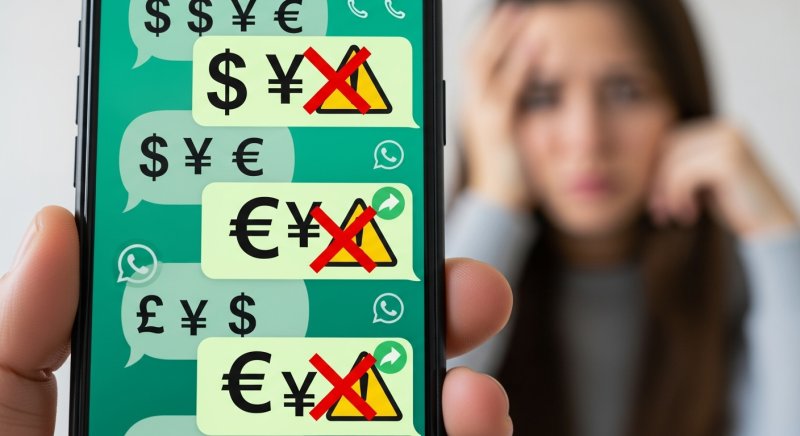
The Hidden Risks of Relying on WhatsApp for Informal Loans
It's a common scenario: a friend needs a small loan, a family member asks for an advance, or you lend money for a shared expense. In our hyper-connected world, the quickest way to record this informal agreement often feels like a quick message on WhatsApp: "Lent you ₹500." While convenient in the moment, relying on WhatsApp chats to track money you've lent or borrowed can lead to significant headaches, misunderstandings, and even strained relationships down the line.
In this article, we'll dive deep into why your favorite messaging app is a poor choice for financial tracking and explore more reliable methods to keep your money matters clear and your relationships intact. You'll learn the pitfalls of informal tracking and discover practical, secure ways to manage your lent and borrowed funds effectively.
The Illusion of Simplicity: Why WhatsApp Feels Convenient (But Isn't)
WhatsApp is undeniably excellent for communication. It's instant, widely used, and keeps conversations in one place. For quick reminders or casual chats, it's perfect. This ease of use often lulls us into thinking it's sufficient for financial agreements. After all, you have a written record, right?
However, the very features that make WhatsApp great for messaging make it terrible for tracking financial transactions. It lacks the structure, security, and dedicated functionality needed to accurately manage money lent or borrowed, especially over time or with multiple parties.
Key Problems with Using WhatsApp for Tracking Money
Lack of Structure and Clarity
WhatsApp chats are free-form conversations. There's no dedicated field for the amount, date, purpose, repayment terms, or interest (if any). Messages can be vague like "Got it," or "I'll pay you back soon." This informal language creates ambiguity and makes it hard to distinguish between a promise and an actual repayment.
Difficulty in Tracking Repayments and Balances
Imagine scrolling through months of chat history, trying to piece together how much you lent, how much has been repaid, and what the current pending balance is. It's a daunting task. Repayments often come in multiple installments, making it nearly impossible to update a running balance accurately within a chat thread. You end up with fragmented information scattered across dozens of messages.
Privacy and Security Concerns
While WhatsApp offers end-to-end encryption for messages, the platform itself isn't designed for secure financial record-keeping. Chats can be accidentally deleted, lost if your phone is stolen or damaged, or become inaccessible if you switch devices without proper backups. Relying on a single point of failure for your financial records is a significant risk. For more on why dedicated tools are better, read Do You Really Need an Expense Tracker App?
Ambiguity and Misunderstandings
Informal agreements are prone to different interpretations. Was that "I'll get you next week" a firm commitment or a casual promise? Without clear, recorded terms, disagreements can arise about when the money is due, how much was actually lent, or if a payment was indeed made. These ambiguities can quickly escalate into disputes.
Auditing and Reconciliation Nightmares
Trying to reconcile your WhatsApp records with your bank statements or other financial documents is a nightmare. There's no easy way to export data in a usable format, generate reports, or get a clear overview of all your lending and borrowing activities. This makes it impossible to conduct a proper financial audit, even for personal use.
Scalability Issues
Perhaps for a single, small, one-off loan, WhatsApp might seem manageable. But what if you lend money to multiple friends, or repeatedly to the same person? What if you're tracking shared expenses for a trip or an event? The complexity multiplies rapidly, making WhatsApp utterly impractical for anything beyond the simplest, most infrequent transactions.
The Real-World Consequences of Poor Tracking
- Strained Relationships: Money issues are a leading cause of conflict between friends and family. Unclear records fuel distrust and resentment.
- Financial Losses: Without proper tracking, it's easy to forget who owes you what, leading to unrecovered funds.
- Increased Stress: The mental burden of trying to remember or chase down payments can be significant.
- Time Waste: Searching through old chats and trying to reconstruct financial histories consumes valuable time.
Better Ways to Track Money Lent and Borrowed
Fortunately, there are far more effective and reliable methods than WhatsApp chats:
- Dedicated Notebook or Spreadsheet: For a manual approach, a simple notebook or a basic spreadsheet (like Google Sheets or Excel) can provide a structured way to record details: date, amount, recipient/lender, purpose, repayment date, and current balance.
- Specialized Money Management Apps: This is by far the most efficient and secure method. Modern personal finance apps are built precisely for this purpose. They offer dedicated features to record loans, track repayments, and show pending balances clearly. For a deeper dive into expense tracking basics, refer to What Is Expense Tracking? A Complete Beginner's Guide to Managing Your Money.
Streamline Your Lending and Borrowing with Depto Flow
Imagine having a clear, organized record of every rupee you've lent or borrowed, accessible anytime, anywhere. This is where a dedicated tool like Depto Flow comes in. Instead of vague WhatsApp messages, Depto Flow allows you to easily track money lent or borrowed, record repayments with specific dates and amounts, and instantly see the pending balance for each person.
This structured approach eliminates ambiguity, prevents misunderstandings, and gives you a real-time overview of your financial commitments. It keeps your personal finances organized and helps maintain healthy relationships by ensuring transparency.
Actionable Tips for Better Money Tracking
- Record Immediately: As soon as money changes hands, record the details. Don't rely on memory or a quick chat message to do it later.
- Be Specific: Always note the exact amount, date, purpose, and agreed-upon repayment terms.
- Centralize Your Records: Use one dedicated system for all your lending and borrowing records.
- Review Regularly: Periodically check your records to ensure accuracy and follow up on pending amounts if necessary.
Conclusion: Move Beyond Casual Chats for Serious Money
While WhatsApp excels at connecting people, it's ill-equipped for the serious business of tracking money lent and borrowed. The lack of structure, difficulty in tracking repayments, and inherent security risks make it a recipe for financial confusion and potential relationship strain. Embracing a dedicated system, whether a simple spreadsheet or a specialized app, is crucial for maintaining clarity, preventing losses, and fostering trust.
Take control of your informal loans and borrowings today. Start tracking your money lent and borrowed with precision and ease. Download Depto Flow to manage all your personal financial transactions, including repayments and pending balances, in one secure place.