
Fixed vs. Variable Expenses: Your Essential Guide to Tracking for Financial Control
Do you ever wonder where all your money goes? For many, the answer lies in understanding and effectively tracking their expenses. But not all expenses are created equal. Some are predictable and steady, while others fluctuate wildly. Distinguishing between fixed and variable expenses is a fundamental step towards gaining true financial control, creating a realistic budget, and achieving your money goals.
In this guide, you'll learn the key differences between fixed and variable expenses, why tracking both is crucial for a healthy financial life, and practical strategies to manage each type effectively. By the end, you'll have a clear roadmap to better manage your money and make informed financial decisions.
Understanding Fixed Expenses: The Predictable Costs
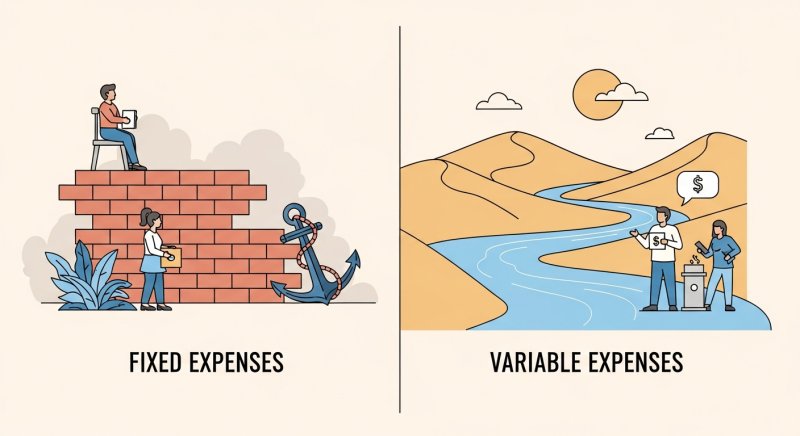
Fixed expenses are costs that generally stay the same each month or billing period. They are predictable, recurring, and often contractual, meaning you've committed to paying them for a certain duration. These expenses are typically easier to budget for because their amounts don't change frequently.
Characteristics of Fixed Expenses:
- Consistent Amount: The payment amount remains the same.
- Regular Schedule: Paid on a predictable schedule (e.g., monthly, quarterly).
- Essential or Contractual: Often tied to basic necessities or long-term agreements.
- Less Flexible: Difficult to change in the short term without significant action.
Common Examples of Fixed Expenses:
- Rent or mortgage payments
- Car loan payments
- Insurance premiums (health, car, home)
- Student loan payments
- Subscription services (Netflix, gym membership)
- Minimum credit card payments
- Property taxes
Understanding Variable Expenses: The Fluctuating Costs
Variable expenses, on the other hand, are costs that change from month to month based on your consumption, usage, or lifestyle choices. They are less predictable than fixed expenses and can fluctuate significantly, making them both challenging to budget for and a key area for potential savings.
Characteristics of Variable Expenses:
- Fluctuating Amount: The payment amount varies.
- Irregular or Usage-Based: Often depend on how much you use or buy.
- Discretionary or Semi-Discretionary: Many are non-essential, offering more control.
- More Flexible: Easier to adjust or reduce in the short term.
Common Examples of Variable Expenses:
- Groceries and dining out
- Utilities (electricity, water, gas – often semi-variable)
- Transportation (gasoline, public transport fares)
- Entertainment (movies, concerts, hobbies)
- Clothing and personal care
- Travel expenses
- Gifts and donations
Why Distinguishing Between Fixed and Variable Expenses Matters
Knowing the difference between these two types of expenses is more than just an academic exercise; it's a cornerstone of effective financial management. Here's why:
- Accurate Budgeting: By separating fixed from variable costs, you can build a more realistic budget. Fixed costs form your baseline, while variable costs are where you can make adjustments.
- Financial Flexibility: Understanding your variable expenses highlights areas where you can cut back quickly if you need to free up cash, such as during an emergency or to reach a savings goal.
- Identifying Overspending: Tracking variable expenses helps you pinpoint where you might be overspending and allows you to make conscious choices to reduce those categories.
- Long-Term Planning: Fixed expenses dictate your minimum financial commitment each month, influencing major decisions like buying a home or taking on new debt.
For a deeper dive into managing your income and expenses for better financial health, consider reading our article on Master Your Monthly Paycheck: The Smart Order to Use Your Salary.
Practical Strategies for Tracking Fixed Expenses
Tracking fixed expenses is generally straightforward due to their predictable nature. Here's how to do it effectively:
- List Them Out: Create a comprehensive list of all your fixed expenses. Include the name of the expense, the amount, and the due date.
- Automate Payments: Set up automatic payments for your fixed expenses whenever possible. This ensures you never miss a payment and avoid late fees, improving your credit health.
- Review Periodically: While fixed, it's wise to review these expenses annually. Are there subscriptions you no longer use? Can you negotiate a better rate for insurance or internet?
Practical Strategies for Tracking Variable Expenses
Variable expenses require more active tracking and management due to their fluctuating nature. This is where most people struggle, but also where the biggest opportunities for savings lie.
- Categorize Everything: Assign every variable expense to a specific category (e.g., Groceries, Dining Out, Entertainment, Fuel). This helps you see where your money is actually going.
- Set Realistic Budgets for Each Category: Based on historical spending, allocate a specific amount for each variable category. Start with a realistic number, then adjust as you go.
- Track in Real-Time: The key to managing variable expenses is consistent, real-time tracking. Don't wait until the end of the month. Record transactions as they happen.
- Look for Trends: After a few months of tracking, you'll start to see patterns. Are you consistently overspending on dining out? Can you reduce your utility usage?
- Implement a "Buffer" for Unexpected Costs: Since variable expenses can be unpredictable, it's wise to build a small buffer into your variable budget categories for minor surprises.
Leveraging Technology for Seamless Expense Tracking
Manually tracking every single transaction can be tedious and prone to error. This is where modern expense tracking tools become invaluable. They automate much of the process, providing clear insights into your spending habits.
Depto Flow is an excellent tool that can simplify tracking both your fixed and variable expenses. With Depto Flow, you can easily track income and expenses, categorize your spending, and get a clear overview of where your money is going each month. Its intuitive interface helps you monitor your variable spending in real-time and ensure your fixed payments are accounted for, empowering you to stick to your budget and achieve your financial goals. By accurately tracking your transactions, you gain the clarity needed to make informed decisions about your money.
Conclusion
Mastering the distinction between fixed and variable expenses is a fundamental skill for anyone seeking financial wellness. Fixed expenses provide your financial baseline, while variable expenses offer flexibility and opportunities for savings. By actively tracking both, you gain the clarity and control needed to build an effective budget, identify areas for improvement, and ultimately, achieve your financial aspirations.
Start by identifying your fixed costs, then commit to diligently tracking your variable spending. For a practical and efficient way to manage all your financial transactions, download Depto Flow today and take the first step towards complete financial clarity.